SainSmart for Raspberry Pi Camera Module 3, 12MP IMX708
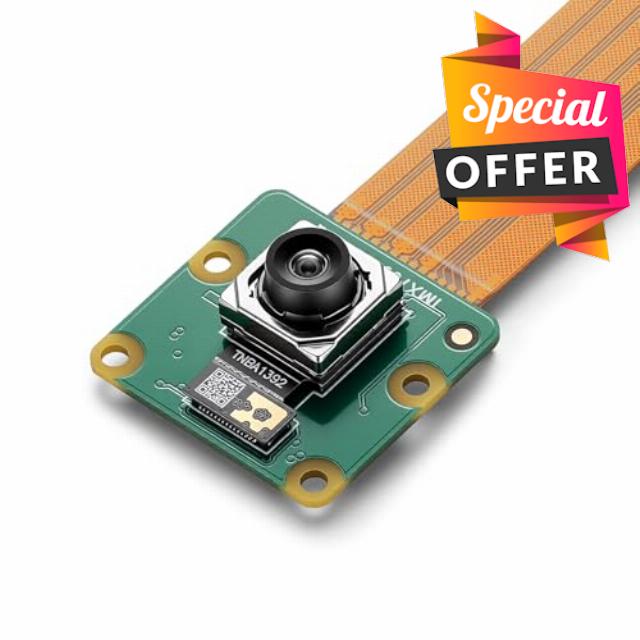
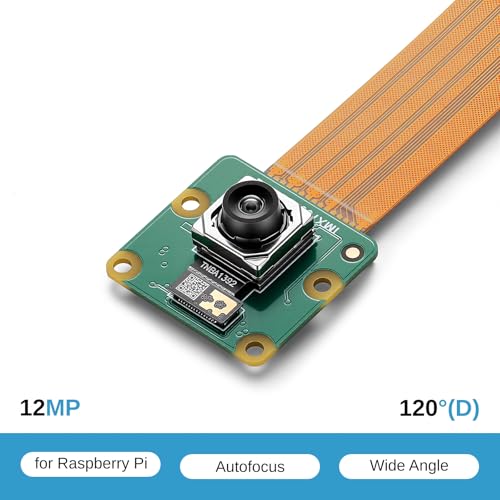
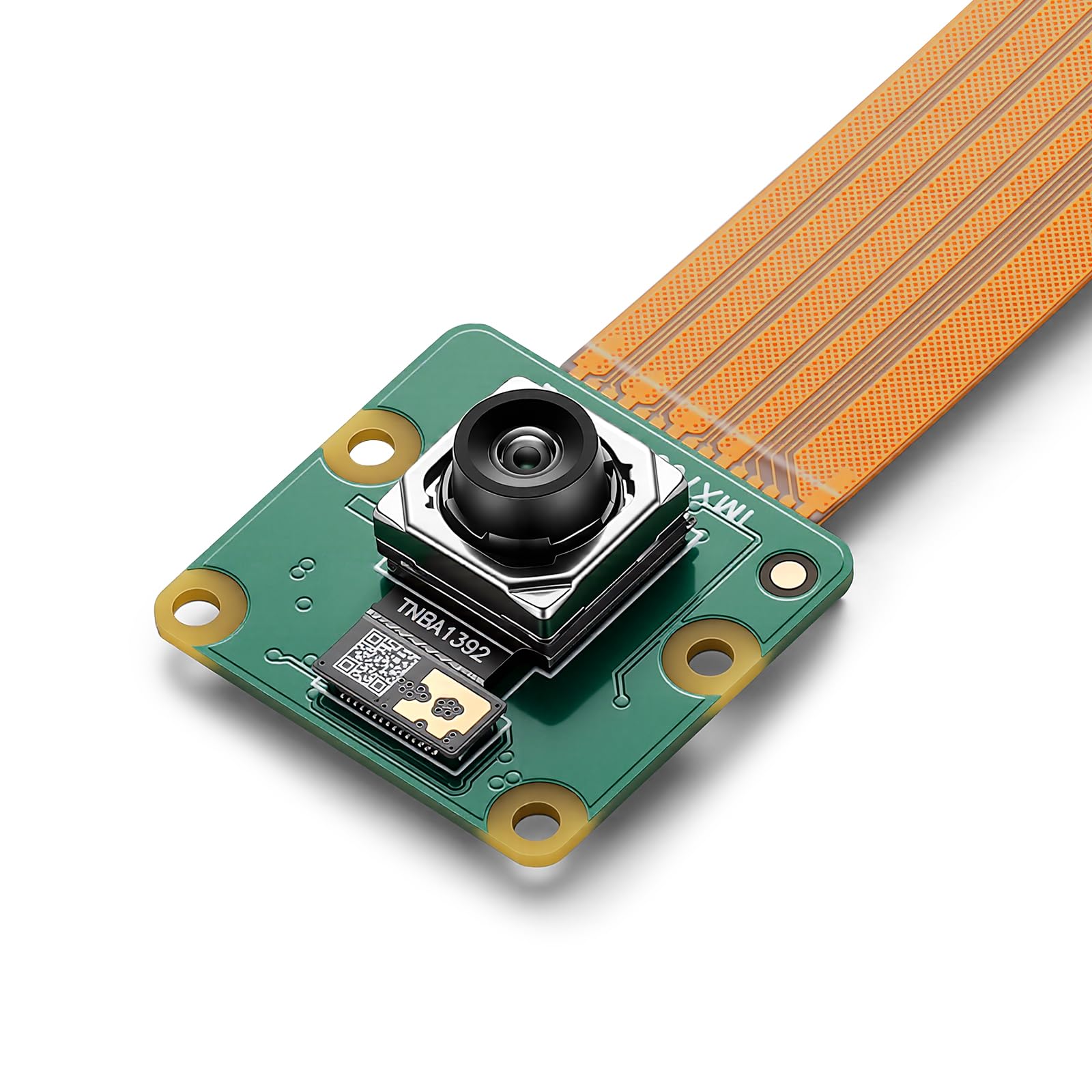
SainSmart for Raspberry Pi Camera Module 3, 12MP IMX708, 120° (D) Wide FOV, PD Autofocus, HDR, RAW10, Compatible with Pi 5, Pi 4B, Pi Zero
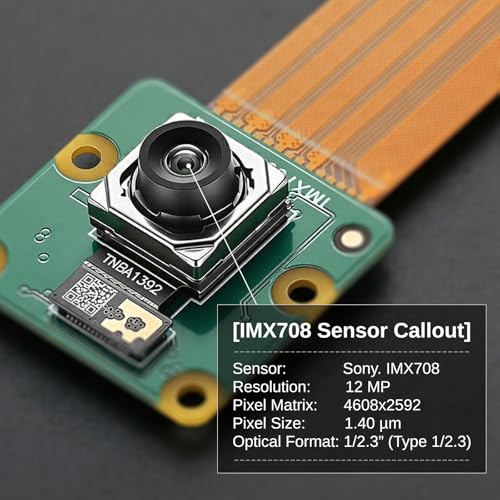
| Sensor | IMX708 |
| Resolution | 11.9 megapixels |
| Sensor size | 7.4mm sensor diagonal |
| Pixel size | 1.4μm × 1.4μm |
| Horizontal/vertical | 4608 × 2592 pixels |
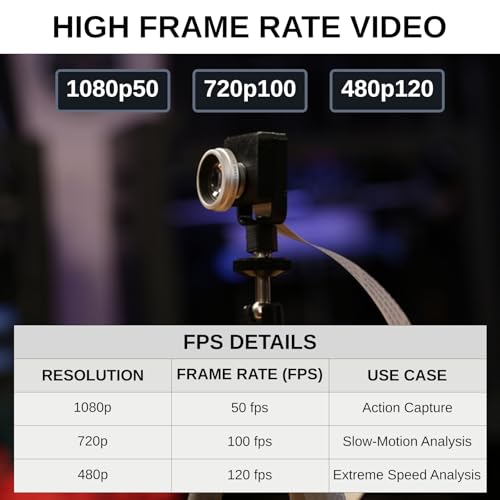
| Common video modes | 1080p50, 720p100, 480p120 |
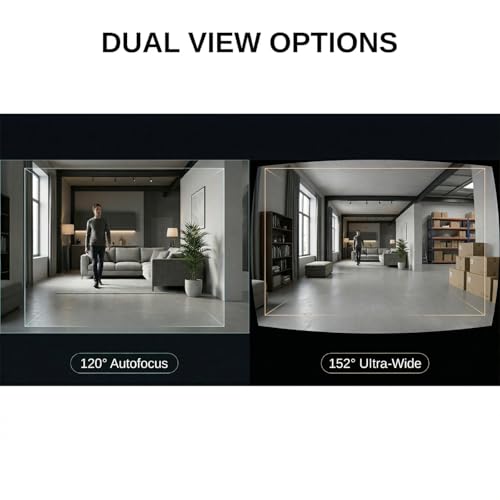
| Field of View(FOV) | 120°(D)x100°(H)x72°(V) |
| Output | RAW10 |
| IR cut filter | Integrated in standard variants; not present in NoIR variants |
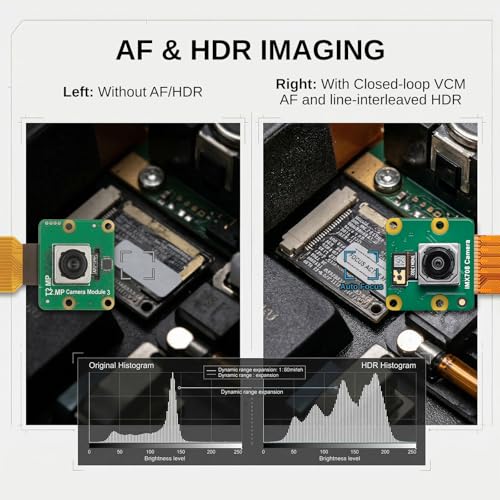
| Autofocus system | Phase Detection |
| Autofocus Dimensions | 25 × 24 × 11.5mm (12.4mm height for Wide variants) |
| Ribbon cable length | 200mm |
| Cable connector | 15 × 1mm FPC |
| Perfect for | Computer Vision & OpenCV Projects, 3D Printer Monitoring,Robotics & AI Detection Applications,DIY Raspberry Pi Projects, Automation & Sensor-Based Projects,Object Detection & Identification Tasks |
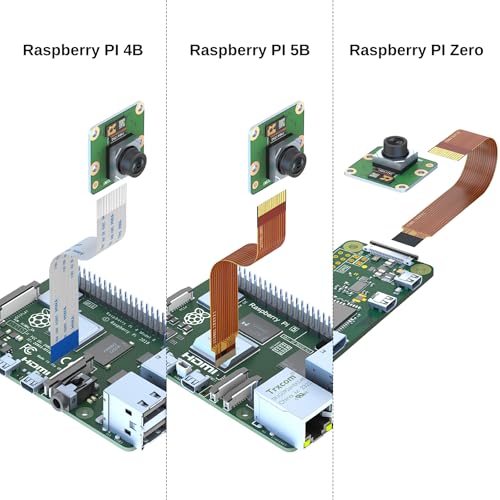
| Compatible with | Raspberry Pi 5, Pi 4B, and Pi Zero series |
| Setup Note | Before first use, ensure the ribbon cable is fully inserted in the correct orientation and enable the required camera overlay configuration in Raspberry Pi OS |
FAQ:
Q1: Is this camera module plug-and-play? How do I set it up?
A: No, as a highly specialized third-party module, it requires a quick configuration. You need to manually enable the sensor in your system settings. Simply open your terminal and add this line to your config file: dtoverlay=imx708 inside the /boot/firmware/config.txt path. Once rebooted, the camera fully integrates with the native libcamera software stack.
Q2: What is the main difference between the 120° (D) and 152° (D) versions? Which one should I choose?
A: The main difference lies in the optics and focus mechanism.The 120° (D) version features Phase Detection Autofocus (PDAF), making it ideal for projects that require tracking moving objects or focusing at varying distances.The 152° (D) version uses a Fixed Focus (FF) ultra-wide lens, designed to capture maximum environmental data in a single frame without blind spots. Choose the 152° for global monitoring, drones, or robotics where maximum Field of View is the priority. Choose the 120° version when autofocus and tracking are important, or the 152° version when maximum scene coverage is the priority.
Q3: Will this fit my existing 3D-printed cases or robotic camera mounts?
A: Yes, absolutely. The PCB dimensions are 25 mm x 23.7 mm. This matches the standard M2 mounting hole spacing of the official Raspberry Pi Camera Module V1 and V2. It acts as a direct, drop-in hardware replacement, so you do not need to redesign your current chassis or brackets.
Q4: Does the package include the specific cables needed for the Raspberry Pi 5 or Pi Zero?
A: Yes! We ensure you have everything needed out of the box. The package includes two different 150mm FPC ribbon cables: one standard 15-pin cable for models like the Pi 4B, and one special 15-pin to 22-pin adapter cable required for the narrower camera ports on the Raspberry Pi 5 and Pi Zero.
Q5: What operating systems are supported, and can I use two cameras at once?
A: The module requires a recent Raspberry Pi OS (Kernel 6.12 or later is recommended) and runs seamlessly via the libcamera ecosystem. It is fully compatible with Pi 4B, Zero, and 5B. Additionally, the Raspberry Pi 5B natively supports simultaneous dual-camera synchronization, allowing you to connect two of these modules to build advanced stereoscopic depth vision setups
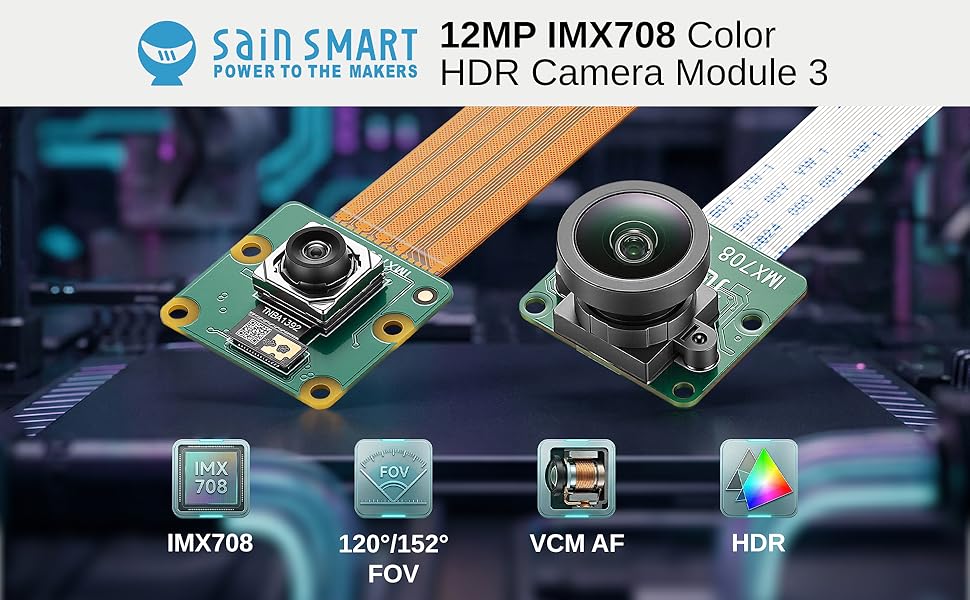
- [12MP IMX708 Sensor with Dual Lens Options] Powered by the 12MP IMX708 sensor, available in two configurations: 1. 120° (D) AF Edition with Phase Detection Autofocus (PDAF) for dynamic tracking 2. 152° (D) Ultra-Wide Edition (Fixed Focus) for full-scene monitoring and environmental awareness
- [High-Speed Video for Machine Vision Applications] Supports 1080p@50fps, 720p@100fps, and 480p@120fps, delivering smooth, low-latency output. Optimized for OpenCV, robotics, object tracking, and real-time AI processing, reducing motion blur in fast-moving scenarios
- [Standard V1/V2 Drop-In Replacement Design] Features 25 × 23.7 mm PCB dimensions with identical M2 mounting layout. Direct replacement for Raspberry Pi Camera V1/V2 modules—no mechanical modification required for existing mounts or enclosures
- [Native libcamera Support & Pi 5 Dual-Cam Ready] Fully compatible with the libcamera stack. Supports Raspberry Pi 4B, Zero, and Pi 5, enabling dual-camera synchronization on Pi 5 for stereoscopic vision and advanced AI applications
- [Complete Kit for Flexible Integration] Includes 1x 25 × 24 × 11.5 mm IMX708 Camera Module, 1x Standard 15-pin FPC cable (for Pi 4B), and 1x 15-pin to 22-pin FPC cable (for Pi 5 / Zero). Both cables are 150mm in length (To initialize the camera, you must manually add the dtoverlay command to your /boot/firmware/config.txt file)
| SKU: | B0GS5MNHJB |
| Brand: | SainSmart |
| Model: | RCA3-120 |
| Manufacture: | SainSmart |
| Origin: | China |
Product Description
| Sensor | IMX708 |
| Resolution | 11.9 megapixels |
| Sensor size | 7.4mm sensor diagonal |
| Pixel size | 1.4μm × 1.4μm |
| Horizontal/vertical | 4608 × 2592 pixels |
| Common video modes | 1080p50, 720p100, 480p120 |
| Field of View(FOV) | 120°(D)x100°(H)x72°(V) |
| Output | RAW10 |
| IR cut filter | Integrated in standard variants; not present in NoIR variants |
| Autofocus system | Phase Detection |
| Autofocus Dimensions | 25 × 24 × 11.5mm (12.4mm height for Wide variants) |
| Ribbon cable length | 200mm |
| Cable connector | 15 × 1mm FPC |
| Perfect for | Computer Vision & OpenCV Projects, 3D Printer Monitoring,Robotics & AI Detection Applications,DIY Raspberry Pi Projects, Automation & Sensor-Based Projects,Object Detection & Identification Tasks |
| Compatible with | Raspberry Pi 5, Pi 4B, and Pi Zero series |
| Setup Note | Before first use, ensure the ribbon cable is fully inserted in the correct orientation and enable the required camera overlay configuration in Raspberry Pi OS |
FAQ:
Q1: Is this camera module plug-and-play? How do I set it up?
A: No, as a highly specialized third-party module, it requires a quick configuration. You need to manually enable the sensor in your system settings. Simply open your terminal and add this line to your config file: dtoverlay=imx708 inside the /boot/firmware/config.txt path. Once rebooted, the camera fully integrates with the native libcamera software stack.
Q2: What is the main difference between the 120° (D) and 152° (D) versions? Which one should I choose?
A: The main difference lies in the optics and focus mechanism.The 120° (D) version features Phase Detection Autofocus (PDAF), making it ideal for projects that require tracking moving objects or focusing at varying distances.The 152° (D) version uses a Fixed Focus (FF) ultra-wide lens, designed to capture maximum environmental data in a single frame without blind spots. Choose the 152° for global monitoring, drones, or robotics where maximum Field of View is the priority. Choose the 120° version when autofocus and tracking are important, or the 152° version when maximum scene coverage is the priority.
Q3: Will this fit my existing 3D-printed cases or robotic camera mounts?
A: Yes, absolutely. The PCB dimensions are 25 mm x 23.7 mm. This matches the standard M2 mounting hole spacing of the official Raspberry Pi Camera Module V1 and V2. It acts as a direct, drop-in hardware replacement, so you do not need to redesign your current chassis or brackets.
Q4: Does the package include the specific cables needed for the Raspberry Pi 5 or Pi Zero?
A: Yes! We ensure you have everything needed out of the box. The package includes two different 150mm FPC ribbon cables: one standard 15-pin cable for models like the Pi 4B, and one special 15-pin to 22-pin adapter cable required for the narrower camera ports on the Raspberry Pi 5 and Pi Zero.
Q5: What operating systems are supported, and can I use two cameras at once?
A: The module requires a recent Raspberry Pi OS (Kernel 6.12 or later is recommended) and runs seamlessly via the libcamera ecosystem. It is fully compatible with Pi 4B, Zero, and 5B. Additionally, the Raspberry Pi 5B natively supports simultaneous dual-camera synchronization, allowing you to connect two of these modules to build advanced stereoscopic depth vision setups